
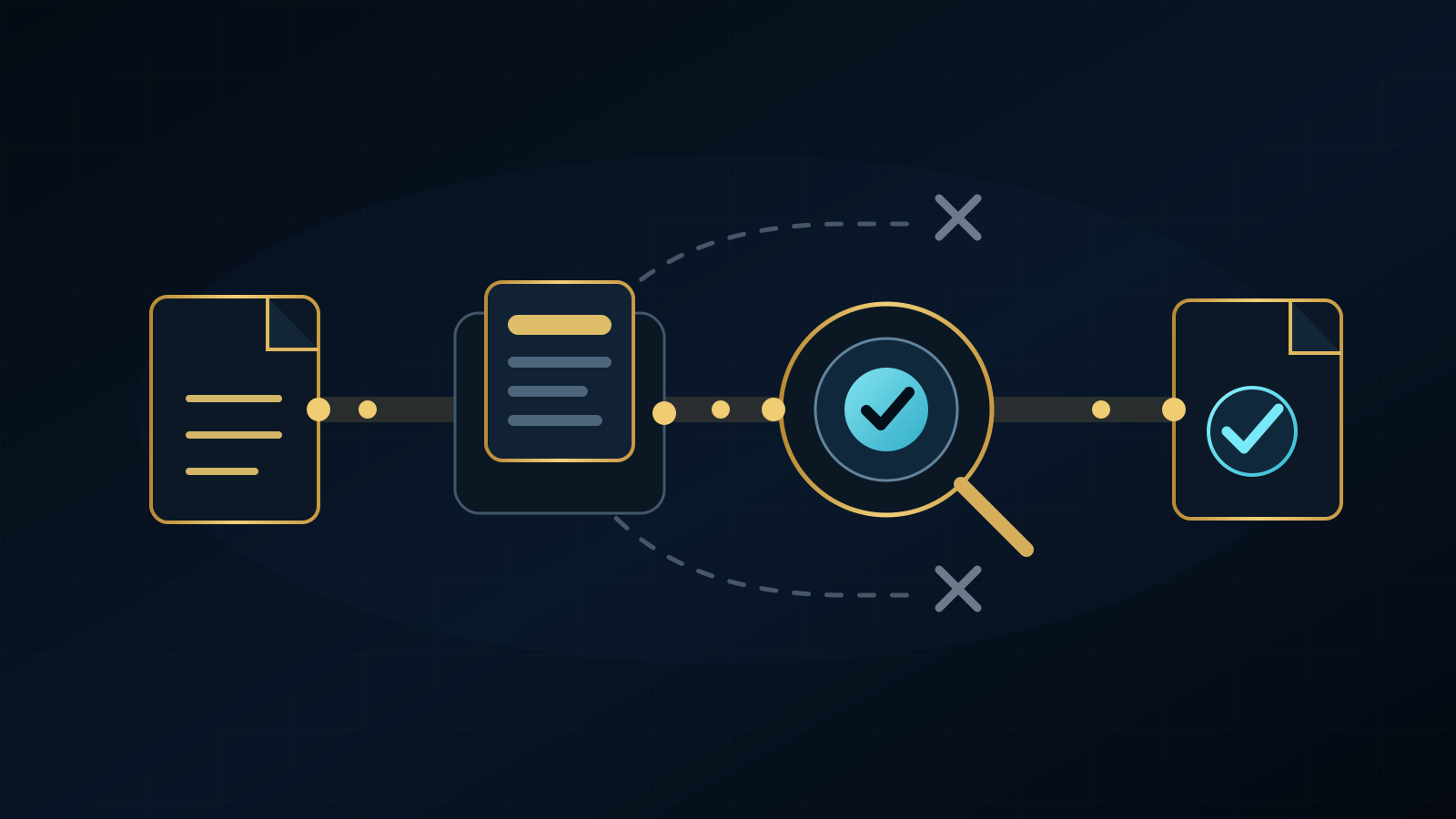
The best first AI workflow is not the most impressive one. It is the smallest consequential process a team can describe, supervise, measure and improve without surrendering accountable judgment.
Start with a workflow you can describe
The first AI initiative should begin with work that is understood, repeatedly performed and important enough to improve. Selecting a tool becomes easier after that workflow has a clear purpose.
Sales, operations and customer service are too broad to evaluate as first use cases. Better candidates are observable sequences such as turning an inbound inquiry into a qualification brief, preparing a proposal draft from approved material, routing support requests, extracting required fields from recurring documents or summarizing a project update from confirmed information.
A workflow is ready for consideration when the team can identify what triggers the work, which information enters the process, which output or decision is expected and who owns final approval. If those answers are disputed, clarify the process before automating it. Otherwise, technology may reproduce inconsistent expectations faster.
Compare candidates using five criteria
The following scorecard is a practical THEION editorial heuristic, not a validated performance model. Rate each dimension from one to five, record the reason and use the comparison to support discussion. A numerical total should never override a serious constraint.
Frequency asks how often the work occurs. A daily or weekly process creates more opportunities to observe outcomes than an annual task, but frequency alone is insufficient when the burden or value is negligible.
Structure asks whether inputs, permitted sources and expected outputs are reasonably consistent. Artificial intelligence may handle unstructured language, but the workflow still needs a defined purpose and a recognizable output. A missing-information checklist can be more valuable than an unrestricted assistant.
Business relevance asks whether the process materially affects response time, quality, delivery coordination or another observable outcome. Relevance must remain separate from risk. Narrow or reject a first candidate when an error could create an unacceptable safety, legal, financial or contractual consequence.
Reviewability asks whether a responsible person can check the output before it causes an external effect. Review cost matters: a draft that takes longer to verify than the original task may not improve the workflow, even if it looks impressive.
Measurement asks whether the team can establish a baseline and define improvement. Completion time, missing-information rate, rework, acceptance after review and escalation frequency are useful candidates. Faster output is not necessarily a better outcome.
Map the process before choosing a platform
Document the trigger, information sources, manual steps, decisions, output, reviewer and destination. Include the exceptions that consume time: incomplete requests, conflicting records, unclear responsibility and unexpected formats.
Consider an illustrative sales workflow. A team receives inquiries, looks up context and prepares a brief before deciding whether to hold a discovery call. Instead of automating all sales activity, an initial implementation could organize submitted information, identify missing fields and draft internal follow-up questions.
The employee still decides whether the opportunity fits, what to ask and whether a message should be sent. The proposed improvement is a clearer handoff, not a commitment to autonomous selling.
Set boundaries and define exceptions
Before implementation, identify approved sources, excluded information, required review and escalation conditions. For the inquiry example, inputs might be the prospect’s submitted form and relevant public company information. Outputs could be an internal summary and a missing-information list.
The workflow should not invent project details, make pricing commitments or send an unreviewed message. When information is insufficient or contradictory, it should expose that limitation instead of producing a confident answer.
Also specify who may correct the output, how a correction is recorded and what happens when a connected system is unavailable. These questions help a buyer evaluate the proposed operating process, not merely its demonstration.
Run a contained pilot
Choose a limited group of users and a defined evaluation period. Keep comparable examples of the existing and proposed processes. Review accuracy, completeness, usefulness, correction time and exceptions alongside speed.
Ask whether the output made the next step clearer, which errors repeated, which source information was missing and whether the implementation created new work. Include at least one incomplete-input case and one conflicting-information case. A demonstration using only ideal examples leaves consequential questions unanswered.
This approach is consistent with the NIST AI Risk Management Framework and its companion Playbook, which organize risk work around Govern, Map, Measure and Manage. They offer a useful structure for examining a first workflow; following a checklist does not itself prove that a system is safe or effective.
Make the next investment an evidence-based decision
At the end of the pilot, make one explicit decision: expand, revise or stop. Record the observations supporting it, the failures encountered and what remains unknown. The strongest candidate is not the one with the highest optimistic score. It combines meaningful value, manageable scope and a credible way to evaluate benefits and failure modes.
A first workflow earns broader scope through evidence from use, not through the size of its initial promise. The aim is to improve a defined part of the operation while keeping consequential decisions with the people who are responsible for them.